Three decades ago, bananas were everything to farmers in Molele in Thyolo.
For 71-year-old Raphael Kadzitche’s generation, the fruit fed their families, educated children, clothed generations, gave them decent homes and created millionaires.
Today, a sense of loss is growing as banana bunchy top disease decimated plantations that draped the hills and valleys along the once-tricky Thyolo-Makwasa-Thekerani-Fatima Road.
“The market still exists and the roads have improved, but the sweet bananas are few,” he says.
On the 92-kilometre newly constructed tarmac that splits the tea-growing district’s hills, one seldom sees the banana bunches that awaited scarce trucks on the tricky terrain come rain or shine.
The virus has left the farmers with little to show for decades of hard work.
“If the tarmac was constructed before the virus wiped our banana plantations, we would have been richer,” Kadzitche declares.
He grieves the fruit that allowed him buy his first pair of shoes and a radio cassette player after good sales at Limbe Market in Blantyre City.
“My late friend and I filled a two-tonne truck. After selling, we grabbed new pairs from Bata stores,” he says.
In 1997, the radio, which symbolised how farming transforms lives, announced the arrival of the virus that “changed everything”.
“The news signalled hunger and poverty as government ordered us to uproot banana plantations. Many just gave up,” he says.
‘Suckers just fell off’
Nanepa Changata, 80, remembers buying a suit—her Sunday best. She gave flashbacks from 1995 when she earned K150 and bought a traditional chitenje for tailor-made Christmas wear.
“These memories offer painful reminders of our loss,” she says.
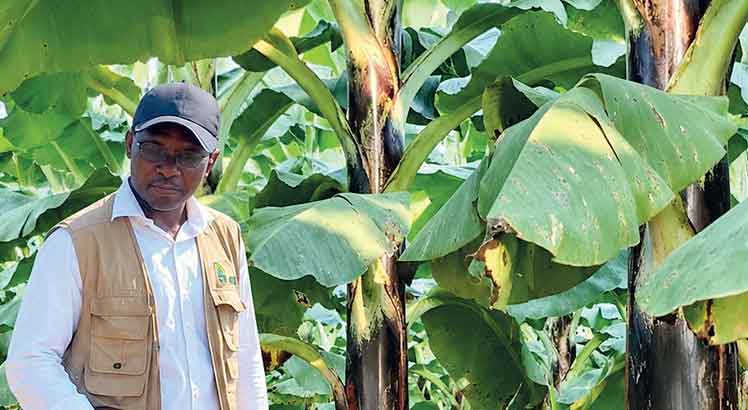
According to the Ministry of Agriculture, Irrigation and Water Development, the virus had disrupted livelihoods of about 185 000 households in Thyolo and Mulanje by 2016.
The official figures show that the country’s banana yield had collapsed to 200 000 metric tonnes by 2023. This represents two-fifths of the 500 000 metric tonnes produced before the virus hit.
Today, the country imports over 18 000 tones from Tanzania alone.
Mwapata Institute reports that an average Malawian farmer yields 11 to 19 tonnes per hectare, with the potential harvest of up to 50 tonnes.
The hilly communities in Thyolo and Mulanje lost the most reliable income source as imported bunches flooded the market.
Evelyn James, 50, recalls: “Diseased suckers just started shrinking and falling off.
“We were told to remove them and plant disease-free suckers after a year, but it was too much work.”
Old-timers watch disappointedly as roads and other conditions that traditionally made banana farming difficult improve. Today, bananas are emerging in districts and terrains where none emerged when Thyolo and Mulanje monopolised the market.
As better roads open access to markets, newcomers and neighbouring countries cash in.
“It is a cruel contradiction,” says Changata. “A banana field symbolised wealth, self-reliance, eating three meals a day and hope. For many, it was the only inheritance. Today, our rocky soils refuse other crops.”
The crumbling economy has dashed their dream of becoming millionaires, as many did. Today, they worry about what they can sell tomorrow.
An invisible foe has shattered an industry that has supported livelihoods for generations.
For government, the fightback includes making disease-free planting materials accessible to farmers while strengthening disease surveillance, extension support and research that reaches farmers before their plantations disappear.
According to Banana Growers Association of Malawi president Lament Mthunzi Makombe, restoring the banana industry requires stronger cooperation among farmers, government, researchers and other stakeholders.
He states: “Malawi needs cooperation among all stakeholders so that farmers can access subsidies, disease-free suckers and training.
“Together, we can help farmers restore and increase banana production to take advantage of the ready market. We need to look beyond selling fresh bananas and promote value addition to boost farmers’ incomes and develop products for the export market that will bring the scarce forex.”
Missed opportunity
Agriculture expert Tamani Nkhono-Mvula urges government to demonstrate stronger commitment to control the virus, which denies farmers benefits of the growing demand for bananas.
He says: “There is a huge market opportunity, but farmers cannot take advantage of that opportunity when their plantations are being destroyed by disease.
“Government and other stakeholders need to invest in disease control and support farmers with the right planting materials and knowledge so that they can increase production and meet the demand